FLAME-RETARDANT FABRICS FOR SOLAR PANELS
by
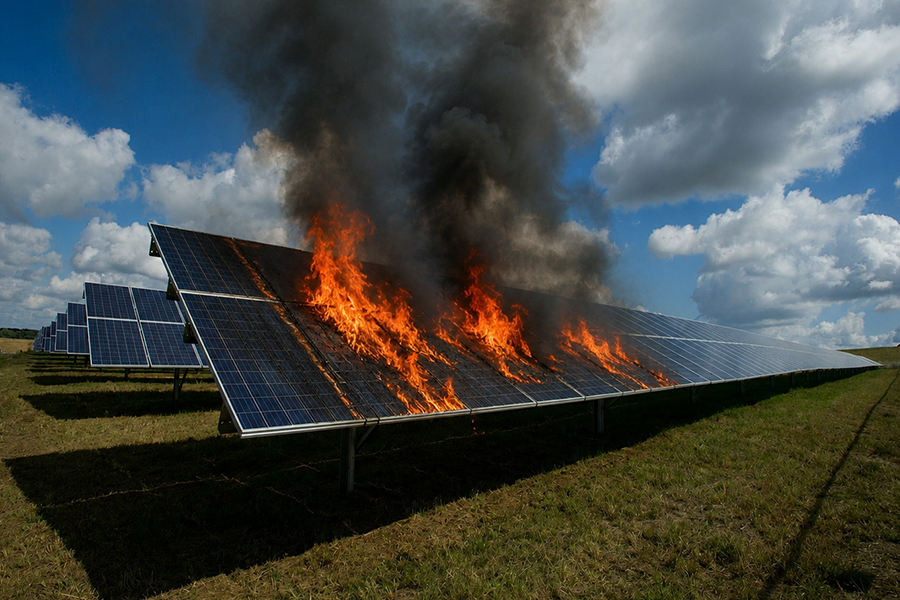
Solar panel installations have become a key solution in the energy transition, both in industrial and residential environments. However, the growth of photovoltaic systems and the presence of electrical components make fire risk a critical factor that must be considered from the design phase.
In this context, the use of flame-retardant fabrics for solar panels stands out as an effective technical solution to improve safety. These materials act as a barrier against fire, limiting flame spread and reducing the impact of potential thermal incidents.
When a fire occurs in a photovoltaic installation, factors such as continuous current generation, heat accumulation, and the difficulty of extinguishing the fire make it essential to have solutions capable of withstanding extreme conditions and contributing to fire containment.
PASSIVE FIRE PROTECTION IN PHOTOVOLTAIC INSTALLATIONS
Passive fire protection is one of the most effective strategies in solar panel installations. Unlike active systems, which require intervention or activation, passive protection acts immediately as a physical barrier that limits the spread of fire.
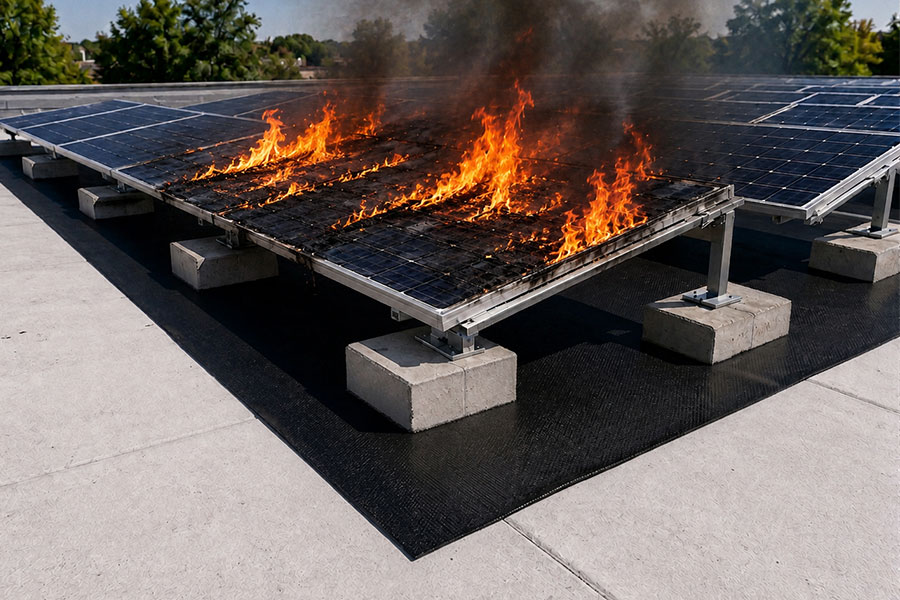
In this field, technical flame-retardant fabrics offer a highly versatile solution. Their ability to adapt to different geometries and their thermal resistance allow them to be integrated into roofs, structures, and protection systems for wiring or auxiliary equipment.
In addition to containing fire, these materials help reduce heat transfer to other areas of the installation, minimizing the risk of fire spread and improving overall fire performance.
TECHNICAL FABRICS FOR HIGH TEMPERATURES IN SOLAR ENVIRONMENTS
Flame-retardant fabrics used in photovoltaic applications are designed to withstand demanding thermal conditions. Depending on their composition, they can resist high temperatures continuously, as well as extreme thermal peaks in fire situations.
To ensure their effectiveness in solar environments, these materials must meet several key technical requirements:
• Mechanical resistance
• Weather resistance
• Adaptability to different configurations
These characteristics make them an ideal solution for both direct protection applications and compartmentalization systems within photovoltaic installations.
EN 13501-1 STANDARD AND BUILDING CODE: REQUIREMENTS FOR FLAME-RETARDANT FABRICS
For use in solar panel installations, flame-retardant fabrics must comply with the European standard UNE EN 13501-1, a mandatory reference for fire reaction and also included in Spain’s Technical Building Code (CTE).
This standard classifies materials based on their behavior in fire conditions, evaluating three fundamental aspects:
• Contribution to fire (A1, A2, B, C, D, E, F)
• Smoke production (s1, s2, s3)
• Flaming droplets (d0, d1, d2)
In photovoltaic applications, especially on rooftops, demanding classifications such as B-s1, d0 or higher are typically required. These ensure low fire contribution, minimal smoke production, and no flaming droplets.
Compliance with UNE EN 13501-1 not only ensures fire performance but also conformity with the CTE, making it a key requirement for project approval and certification.
APPLICATIONS OF FLAME-RETARDANT FABRICS IN SOLAR INSTALLATIONS
Flame-retardant fabrics can be integrated into different parts of a photovoltaic installation, providing an additional level of safety and thermal protection.
Their main applications include:
• Roof protection where solar panels are installed
• Compartmentalization of technical areas
• Protection of wiring and electrical connections
• Thermal barriers between modules and structure
• Containment systems in case of fire
Their versatility allows them to adapt to different configurations, facilitating integration into both new projects and existing installations.
WELS2 FABRIC: FLAME-RETARDANT SOLUTION FOR SOLAR PANELS
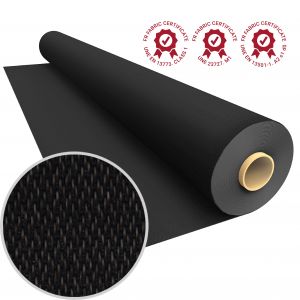
Texfire offers multiple fabrics certified according to UNE EN 13501-1. Among them, the WelS2 fabric stands out for photovoltaic applications due to its versatility and weather resistance.
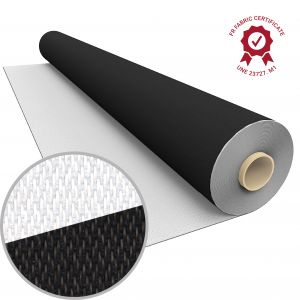
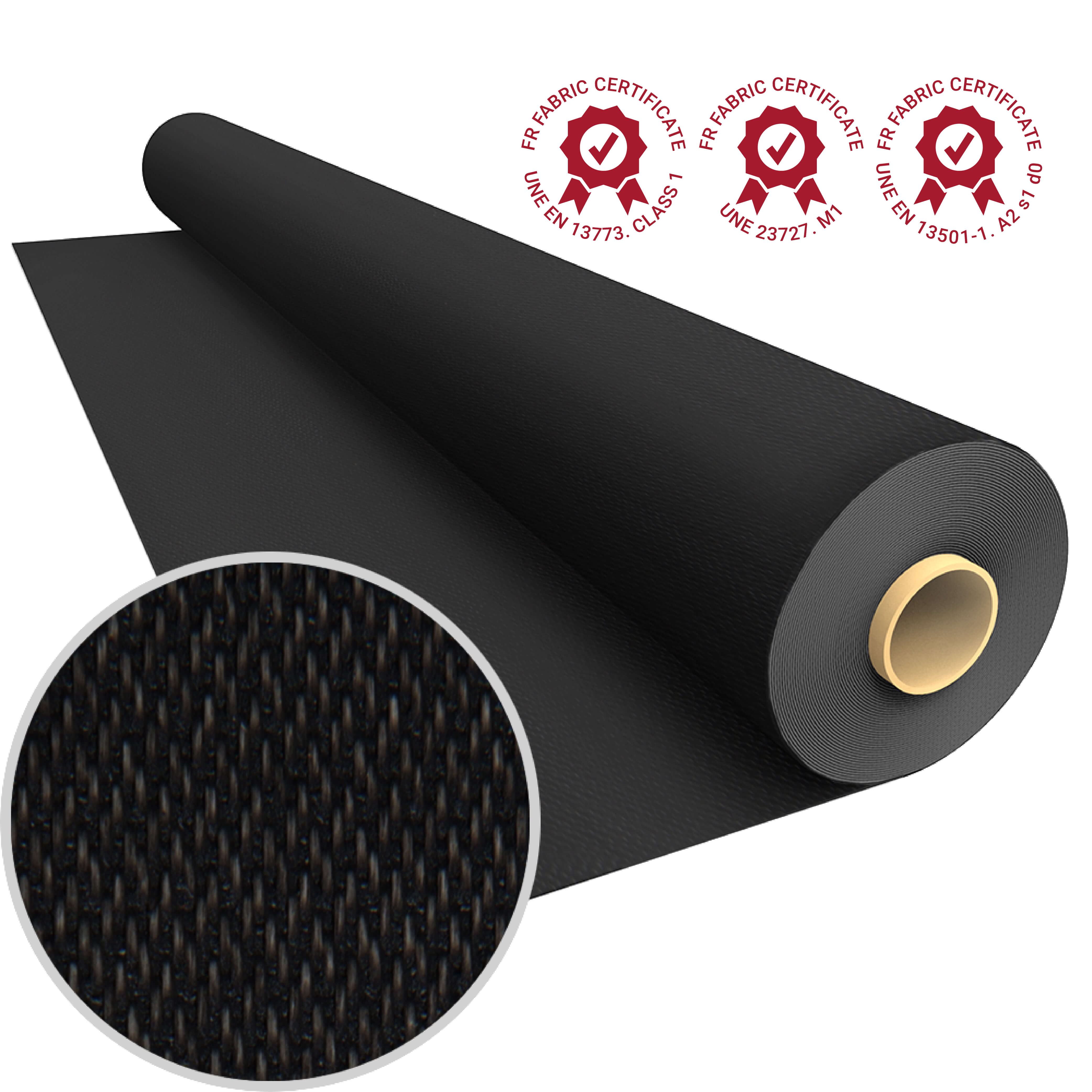
WelS2 is a fiberglass fabric with a waterproof coating on both sides. This configuration provides high mechanical resistance, great flexibility, and excellent protection against sparks and intense heat sources.
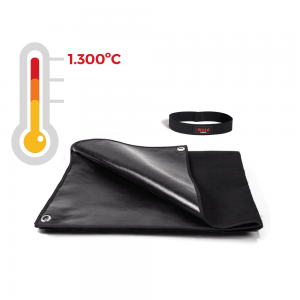
It is designed to withstand thermal peaks of up to 900 ºC, is fully waterproof, and can be used on both sides, making installation easier and maximizing its service life in demanding environments.
In terms of fire performance, WelS2 achieves an A2-s1, d0 classification according to EN 13501-1, ensuring very low fire contribution, minimal smoke emission, and no flaming droplets.
It also holds additional certifications such as UNE 23727 (M1), UNE EN 13773 (Class 1), and ISO 9150 (Class 1) tests, validating its performance in high thermal demand environments.
FREQUENTLY ASKED QUESTIONS ABOUT FLAME-RETARDANT FABRICS FOR SOLAR PANELS
Why is fire protection important in photovoltaic installations?
Because they combine continuous electrical generation and heat accumulation, increasing fire risk and making extinguishing more difficult. Incorporating passive protection is key to reducing these risks.
What advantages do flame-retardant fabrics offer compared to other solutions?
They act immediately without activation, adapt to multiple configurations, and help contain fire while reducing heat transfer.
What fire reaction classification is recommended?
In most rooftop solar applications, classifications such as B/s1/d0 or higher are required, ensuring safety against flames, smoke, and dripping.
Where can these fabrics be installed in a solar plant?
They can be used on roofs, wiring, technical areas, structures, and as thermal barriers or fire containment systems.
CONCLUSION
The growth of photovoltaic installations makes it essential to integrate effective safety solutions against fire risk. In this context, flame-retardant fabrics play a fundamental role as passive protection systems capable of limiting fire spread and reducing thermal impact.
Thanks to their resistance, versatility, and regulatory compliance, these materials are becoming a key technical solution in solar environments. Texfire, as a specialized manufacturer, offers certified fabrics and solutions tailored to the specific needs of each industrial project.
CONTACT
If you need technical advice on flame-retardant fabrics for photovoltaic installations or are looking for a solution tailored to your project, contact the Texfire team to receive a personalized proposal.
Request technical information or a quote with no obligation.
Related products