Safety in industrial vehicles with lithium batteries: the role of fire-resistant blankets in logistics environments
by
The electrification of industrial equipment is a growing trend in warehouses, logistics centres and production environments. More and more companies are adopting electric vehicles powered by lithium batteries due to their energy efficiency, lower maintenance requirements and reduced emissions.
In this context, fire protection for electric industrial vehicles is becoming a key aspect of risk management in modern facilities.
GROWTH OF ELECTRIC INDUSTRIAL VEHICLES IN LOGISTICS AND INDUSTRY
The use of lithium batteries has rapidly expanded across different types of industrial vehicles and equipment. This development is driven by the need to improve productivity and comply with increasingly stringent environmental regulations.
Some of the most common types of equipment incorporating this technology include:
- Electric forklifts
- Electric pallet trucks
- Light industrial vehicles
- Automated materials-handling equipment
Furthermore, this electrification is not limited to the inside of warehouses. Sectors such as ports, airports and logistics platforms are also introducing electric vehicles for loading operations and internal transport.
This increase means a higher concentration of lithium batteries within the same environment, making it necessary to adapt safety protocols and fire response systems accordingly.
RISKS ASSOCIATED WITH LITHIUM BATTERY FIRES
Lithium battery fires have different characteristics from conventional fires. They can reach extremely high temperatures, trigger chain reactions and release potentially hazardous gases and particles.
In industrial vehicles, these fires may start during operation, charging or even while the vehicle is idle. Their rapid development makes it essential to have solutions available that allow immediate action to contain the fire during its initial stage.
In environments with multiple pieces of equipment, such as logistics warehouses, the risk of fire spreading to other vehicles or goods is particularly significant and can result in substantial material damage and operational downtime.
FIRE CONTAINMENT SOLUTIONS FOR INDUSTRIAL VEHICLES
When dealing with these types of risks, containment solutions play a crucial role. The primary objective is to isolate the fire at its point of origin, reducing its impact and preventing it from spreading to nearby assets.
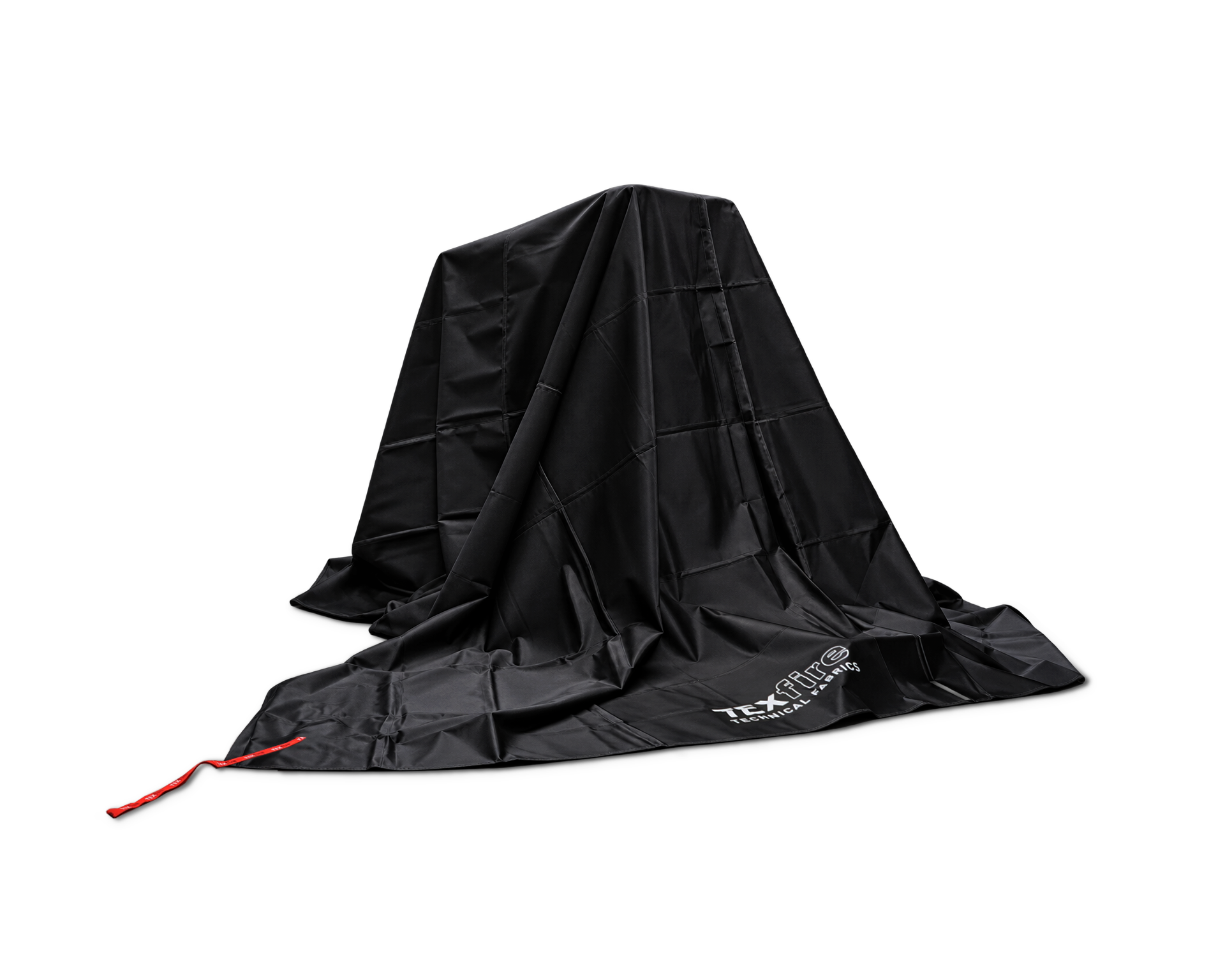
Fire blankets designed for industrial vehicles make it possible to completely cover the affected equipment, creating a thermal barrier that limits the development of the fire and helps bring it under control.
These solutions are particularly useful in environments where rapid response is critical and where collateral damage needs to be minimised.
E-FORKLIFT PRO BLANKET: A DEDICATED SOLUTION FOR FORKLIFTS
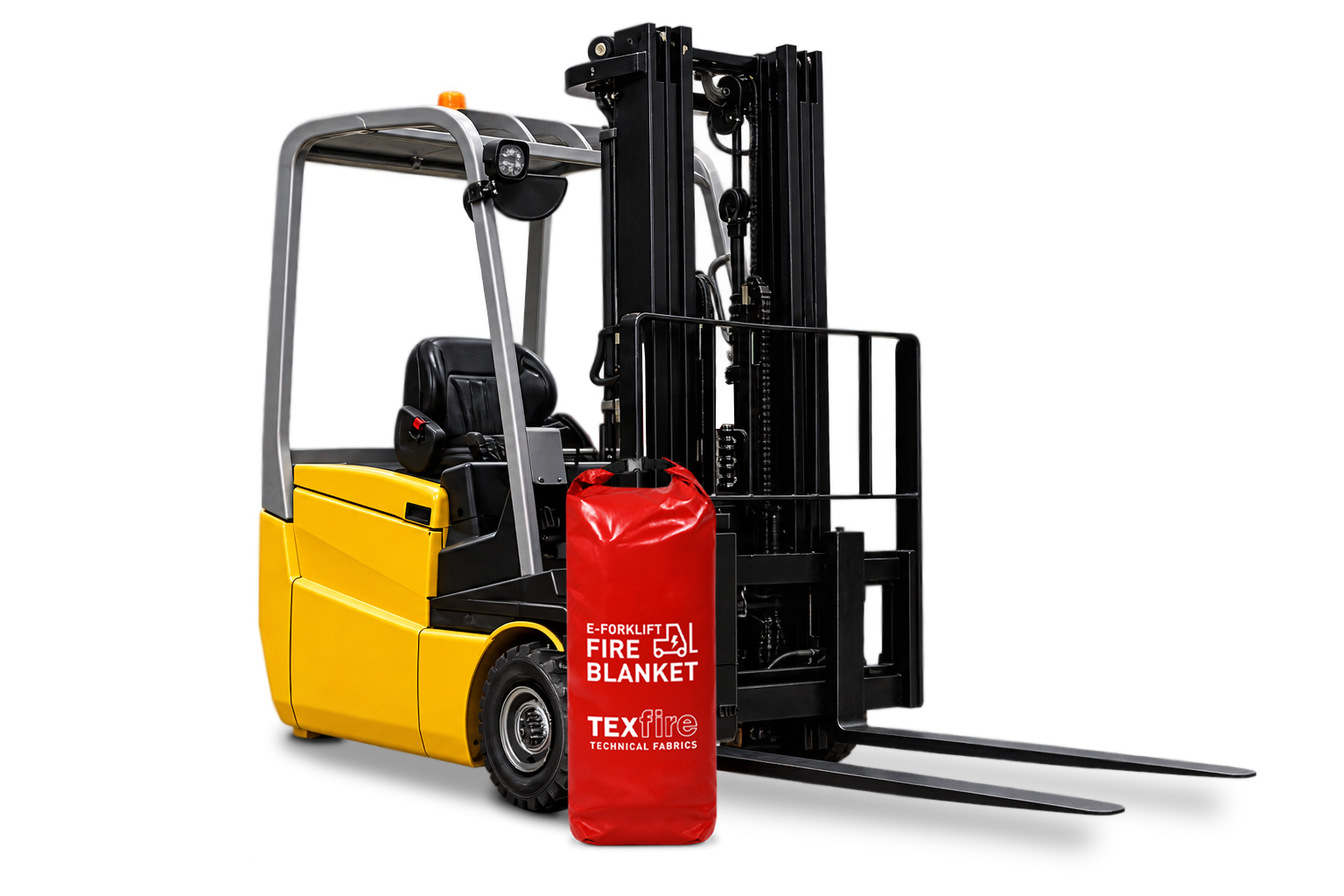
In response to the growing presence of electric industrial vehicles, Texfire has developed the E-Forklift Pro Blanket, a solution designed to contain fires involving forklifts, pallet trucks and other industrial equipment.
Its design makes it possible to effectively cover most forklifts thanks to the available dimensions of 5x5 metres and 7x7 metres. These sizes ensure complete coverage of the equipment in the event of an emergency.
The blanket features a “Z” folding system that enables fast and intuitive deployment in under 20 seconds. It also includes four two-colour handles that help position it correctly during an intervention, with use by at least two people recommended.
TECHNICAL MATERIALS AND CERTIFICATIONS
The E-Forklift Pro Blanket is manufactured from a high-performance technical fabric capable of withstanding temperatures above 1,400ºC, making it suitable for high-intensity fires.
The fabric is certified in accordance with EN 13501-1 and has achieved an A2-s1-d0 fire performance classification, ensuring a high level of safety for industrial applications.
The blanket also complies with DIN SPEC 91489:2024-11, which sets out the technical requirements for fire blankets intended for electric and combustion-engine vehicles, validating its use in real-life situations.
HANDLING AND STORAGE
The blanket has been designed for easy handling in emergency situations. It is available in two versions weighing either 14 kg or 26 kg, allowing it to be transported and deployed quickly without the need for additional equipment.
It is supplied in a waterproof duffel-style bag that protects the product and makes it easy to store. As an additional option, Texfire offers a rigid cabinet for more structured integration into industrial facilities.
FREQUENTLY ASKED QUESTIONS ABOUT FIRE BLANKETS FOR INDUSTRIAL VEHICLES
What types of vehicles is this blanket designed for?
It is designed for forklifts, electric pallet trucks and other industrial vehicles, including both electric and combustion-engine models.
Which standards does the blanket comply with?
It complies with DIN SPEC 91489:2024-11, and the fabric is certified to EN 13501-1 with an A2-s1-d0 classification.
Is it easy to deploy in an emergency?
Yes. Thanks to its Z-folding system, it can be deployed intuitively in under 20 seconds.
How is the blanket stored?
It is supplied in a waterproof bag for easy storage, with an optional rigid cabinet also available.
CONCLUSION
The increase in industrial vehicles powered by lithium batteries is redefining safety standards in logistics and industrial environments. Adopting dedicated fire containment solutions is essential for reducing risks and ensuring operational continuity.
The E-Forklift Pro Blanket provides a technical solution tailored to these requirements, combining thermal resistance, ease of use and regulatory compliance.
As a specialist manufacturer of fire-resistant fabrics, Texfire develops solutions designed to improve safety in demanding industrial environments.
CONTACT AND TECHNICAL ADVICE
If you would like to improve safety at your facility or need further information about fire-resistant solutions for industrial vehicles, the Texfire team can advise you.
Contact Texfire for technical advice and a proposal tailored to your requirements.
Related products